In this follow up we are going to look at other journalists who also report on food and agriculture, and how they might be influenced by the agrochemical industry.
As mentioned before in part one, a source in one of the articles on the Johnson case, Dr. Val Giddings, helped to raise hundreds of thousands of dollars for Academics Review, an industry front group, that went to fund Biotech Literacy Project "boot camps". These bootcamps were intended to train journalists about how to present the debate about GMO's and pesticides.
As the name suggests the events were funded by the Genetic Literacy Project - another industry front group started by Jon Entine.

Experts, you say?
Let's start with the first bootcamp in 2014.

As mentioned in the previous blog post, Dr. Giddings was a key feature in setting up Academics Review along with Eric Sachs, the director of regulatory policy in scientific affairs at Monsanto, Bruce Chassy, professor at the University of Illinois, and Jay Byrne, the former director of corporate communications at Monsanto, and current president of v-Fluence Interactive, a public relations firm.
Dr. Giddings has helped to raise hundreds of thousands of dollars that went to fund the BLP journalist bootcamps. According to a piece in the Progressive by investigative journalist Paul Thacker, "The only traceable money source is the biotech industry." He also reports that in emails, "journalists are described as "partners.""
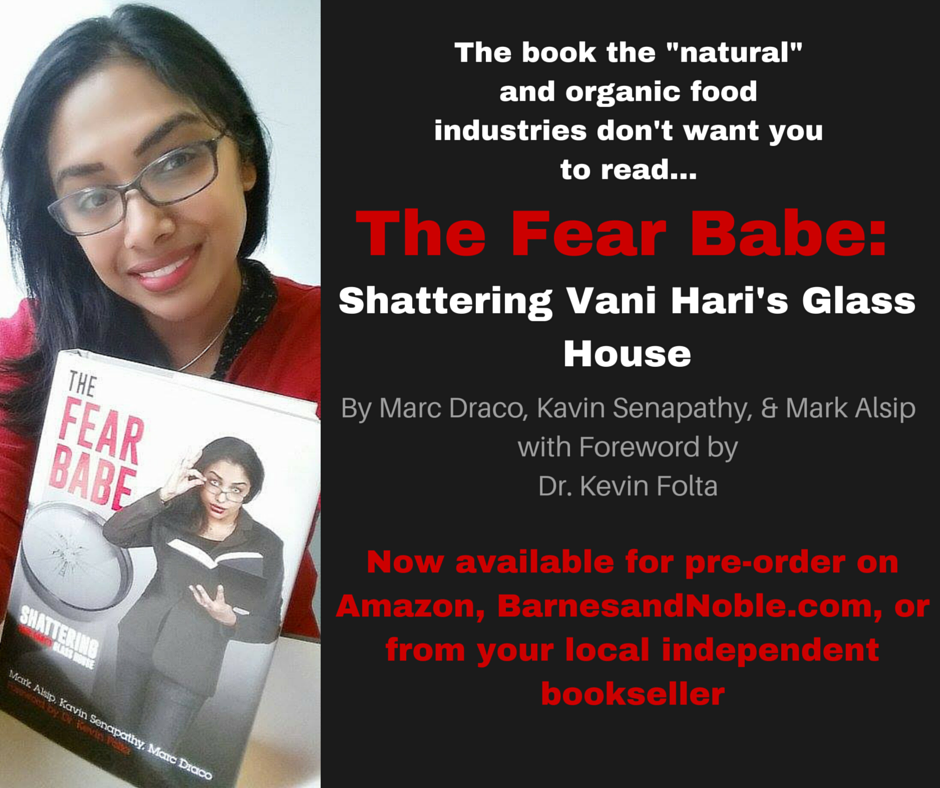
In addition to Giddings, Sachs, Chassy and Byrne, event organizers included the former chairman of the horticultural sciences department at the University of Florida, Kevin Folta, who was caught (again) recently taking undisclosed consulting funds from Bayer, and consultant Cami Ryan who shortly after this event started working for Monsanto - now owned by Bayer.
A couple of the journalist "partners" in attendance at the first bootcamp were Tamar Haspel from the Washington post and Keith Kloor who was with Discover Magazine.
Probably unsurprisingly, a member of the American Council on Science and Health had a hand in the 2015 bootcamp held at the end of May in at UC Davis. "Experts" indeed. This follow up to the first event was promoted by former ACSH President Hank Campbell's on his website Science 2.0. Hank was also a presenter as part of the journalism round table and also moderating a panel related to chemicals in the environment as clearly, he's an expert in such things.
Another well respected, academic luminary who contributed their expertise was Yvette d'Entremont aka SciBabe as keynote speaker. Because who better than to teach journalists how to talk about GMOs and pesticides than a woman who used to work for Amvac Chemical Corporation who sells Lorsban (chlorpyrifos) and had an agreement with Monsanto to promote Roundup Ready GMO crops? I'm sure she provided an unbiased perspective.

Other presenters include, Entine, Chassy, Folta and Byrne, SciMom Anastasia Bodnar, Biology Fortified's David Tribe, Monsanto's Cami Ryan, Alison Van Eenennaam, and journalists Keith Kloor (again), Nathanael Johnson, and Brooke Borel.
Borel wrote about her ethical conundrum regarding the acceptance of the $2000 honorarium for presenting at the 2015 BLP boot camp in Popular Science.
The sponsors of the second boot camp listed on the Science 2.0 site are the Genetic Literacy Project, Academics Review, the World Food Center Institute for Food and Agricultural Literacy and the University of Florida.
When writing an email to scientists in 2016 Chassy of Academics Review states that, "the three day Boot Camp is relatively expensive since we pay everyone's travel and lodging as well as honoraria. Participants receive $250 and presenters as much as $2500 (journalists aren't inexpensive) ... I need to be clear upfront that our support comes from BIO, USDA, state – USAID and some foundation money, so industry is indirectly a sponsor. We are 100% transparent about sponsorship."
One has to wonder if Tamar Haspel, Keith Kloor, and Nathanael Johnson had a similar ethical dilemma when it came to taking the honorarium as did Brooke Borel?
Tamar Haspel is a freelance writer who regularly publishes articles in the Washington Post. Haspel has been quoted on the website Sense About Science USA. She states, "...STATS is invaluable to me,"referring to their advisory service to journalists.

Sense About Science has been criticized for their industry slanted position. The Intercept reported in 2016, ""When journalists rightly ask who sponsors research into the risks of, say, asbestos, or synthetic chemicals, they’d be well advised to question the evidence Sense About Science presents in these debates as well."
In addition to the BLP bootcamps, Tamar also appeared as part of a panel at an event sponsored by Ketchum PR, who have been hired by the agrochemical industry in recent years to work on the GMO Answers website along with other favorable messaging. Atlantic contributor David Freedman canceled his appearance at the same event upon learning who the sponsors were. Haspel obviously didn't have the same change of heart.
Haspel's colleague Keith Kloor, who attended both bootcamps has been noted for his enthusiastic promotion of genetically engineered crops and behind the scenes collaboration with Kevin Folta, another bootcamp alumnus. Emails have revealed Kloor communicated with both Folta and Entine after Folta's undisclosed $25k grant from Monsanto was revealed through FOIA requests by USRTK in 2015. Kloor and Folta collaborated to preemptively release the information as a form of damage control. Huffington post reports that, "Folta alerted Kloor that he was going through the emails to figure out how to deal with any bad press, including his funding. “I started going through this last night and I’m thinking a preemptive release of the materials is good, but selectively.”"
Kloor's story published in Nature insisted that "The records...do not suggest scientific misconduct or wrongdoing by Folta." Anyone familiar with the saga, already knows Kevin was less than honest about his connection to Monsanto. He publicly stated on the Joe Rogan show that "I have nothing to do with Monsanto." The records more than suggest that he was taking money from them for his outreach program and in touch with them regularly prior to this statement made on the JRE podcast on June 4, 2015.
Does this sound like someone with nothing to hide?

After the story about Folta was published in Nature, Entine contacted Kloor via email to complain about his use of 'close ties' to describe Folta's relationship with the agrochemical industry. Kloor stated that he "agonized" over the story, and that the phrase was added in the final edits. He described Folta's objection to its use as "fair." He then states to Entine, "You and I should also talk. You are in the emails."
In addition to his adventures with Folta and Entine, Kloor has earned a reputation of relying on rhetorical tactics to discredit Big Agribusiness critics. He's accused registered dietitian Carol Bartolotto who once dared to question the touted benefits of GE crops, of fearmongering and "pure denialism." Bartolotto was mentioned in one of Kloor's articles flogging the tired guilt by association maneuver of dragging out the contentious topic of vaccination. This is a favorite of people who do not want to address legitimate concerns, because shit, that's hard.
Kloor has been criticized by Professor of Anthropology Glenn Davis Stone at Washington University for his take on farmer suicides in India. Farmer suicide is a complex problem, and while myths about the causes behind it are being widely spread by both sides of the "GMO debate" Stone notes that Kloor does little to draw attention to the root causes and instead uses the suicide as an opportunity to slam environmentalists. "But Kloor’s goal was not to understand the problem of farmer suicide, but rather to use it to whip up hatred toward Vandana Shiva and “liberal and environmentalist circles,” where GMOs are unpopular. The intent was to turn a complex social science question into a moral fable." He concludes his critique stating that, "In other writing Kloor calls GMO opponents unscientific. However, I would suggest that it is articles like this, which bash one side’s irresponsible claims but not the other’s, and which aim to create exasperation rather than insight, that are the real impediments to the scientific understanding of our world."
Nathanael Johnson, the other journalist mentioned earlier who joined the boot camp ranks with Haspel and Kloor, was recruited to join in the 2015 event as seen in these emails. He's a favorite of Entine, who praised him over a 26 part series on GMOs he says "Sets Stage For GMO Science Journalism Conclave" in Forbes. He states, "How can science journalists refocus the public’s attention on empirical data and away from fear mongering? We see hopeful signs of that happening with journalist-blogger Keith Kloor, plant geneticist Kevin Folta, and young scientist-communicators like Anastasia Bodnar and Karl Haro von Mogel at Biofortified." How grand it must be, to have your reporting be praised by an infamous agribusiness apologist and atrazine defender who heads an industry front group.
Johnson also appears in the recent documentary "Food Evolution." I reviewed that steaming pile of shit and wasted time on my Twitter feed if you're interested.
I think at this point it's safe to say that the agrochemical industry is making a concerted effort to control the narrative on GMOs and pesticides. Part of this plan as we can see is to influence journalists and provide them with industry favorable talking points. Questioning where, and how journalists get their information is never a bad idea.
A couple of the journalist "partners" in attendance at the first bootcamp were Tamar Haspel from the Washington post and Keith Kloor who was with Discover Magazine.
Probably unsurprisingly, a member of the American Council on Science and Health had a hand in the 2015 bootcamp held at the end of May in at UC Davis. "Experts" indeed. This follow up to the first event was promoted by former ACSH President Hank Campbell's on his website Science 2.0. Hank was also a presenter as part of the journalism round table and also moderating a panel related to chemicals in the environment as clearly, he's an expert in such things.
 |
| Bio accumulation is a billion dollar Big Environmental conspiracy, yo. |
Another well respected, academic luminary who contributed their expertise was Yvette d'Entremont aka SciBabe as keynote speaker. Because who better than to teach journalists how to talk about GMOs and pesticides than a woman who used to work for Amvac Chemical Corporation who sells Lorsban (chlorpyrifos) and had an agreement with Monsanto to promote Roundup Ready GMO crops? I'm sure she provided an unbiased perspective.

Other presenters include, Entine, Chassy, Folta and Byrne, SciMom Anastasia Bodnar, Biology Fortified's David Tribe, Monsanto's Cami Ryan, Alison Van Eenennaam, and journalists Keith Kloor (again), Nathanael Johnson, and Brooke Borel.
Borel wrote about her ethical conundrum regarding the acceptance of the $2000 honorarium for presenting at the 2015 BLP boot camp in Popular Science.
"I was offered a $2000 honorarium as well as expenses. I wrote back and asked who would provide the honorarium and was told it would be a combination of bonds from UC Davis, USDA, state money, and the Biotechnology Industry Organization (BIO).
Now, BIO is an industry group. When I saw it listed, I decided then that if I went to the conference, I wouldn't take that money, because they cover GMOs here at Popular Science as well as other outlets. Not everyone would see it this way but in my view this is especially important in a case like this because GMOs are so polarizing for many folks."
The sponsors of the second boot camp listed on the Science 2.0 site are the Genetic Literacy Project, Academics Review, the World Food Center Institute for Food and Agricultural Literacy and the University of Florida.
When writing an email to scientists in 2016 Chassy of Academics Review states that, "the three day Boot Camp is relatively expensive since we pay everyone's travel and lodging as well as honoraria. Participants receive $250 and presenters as much as $2500 (journalists aren't inexpensive) ... I need to be clear upfront that our support comes from BIO, USDA, state – USAID and some foundation money, so industry is indirectly a sponsor. We are 100% transparent about sponsorship."
One has to wonder if Tamar Haspel, Keith Kloor, and Nathanael Johnson had a similar ethical dilemma when it came to taking the honorarium as did Brooke Borel?
Tamar Haspel is a freelance writer who regularly publishes articles in the Washington Post. Haspel has been quoted on the website Sense About Science USA. She states, "...STATS is invaluable to me,"referring to their advisory service to journalists.

Sense About Science has been criticized for their industry slanted position. The Intercept reported in 2016, ""When journalists rightly ask who sponsors research into the risks of, say, asbestos, or synthetic chemicals, they’d be well advised to question the evidence Sense About Science presents in these debates as well."
In addition to the BLP bootcamps, Tamar also appeared as part of a panel at an event sponsored by Ketchum PR, who have been hired by the agrochemical industry in recent years to work on the GMO Answers website along with other favorable messaging. Atlantic contributor David Freedman canceled his appearance at the same event upon learning who the sponsors were. Haspel obviously didn't have the same change of heart.
Haspel's colleague Keith Kloor, who attended both bootcamps has been noted for his enthusiastic promotion of genetically engineered crops and behind the scenes collaboration with Kevin Folta, another bootcamp alumnus. Emails have revealed Kloor communicated with both Folta and Entine after Folta's undisclosed $25k grant from Monsanto was revealed through FOIA requests by USRTK in 2015. Kloor and Folta collaborated to preemptively release the information as a form of damage control. Huffington post reports that, "Folta alerted Kloor that he was going through the emails to figure out how to deal with any bad press, including his funding. “I started going through this last night and I’m thinking a preemptive release of the materials is good, but selectively.”"
Kloor's story published in Nature insisted that "The records...do not suggest scientific misconduct or wrongdoing by Folta." Anyone familiar with the saga, already knows Kevin was less than honest about his connection to Monsanto. He publicly stated on the Joe Rogan show that "I have nothing to do with Monsanto." The records more than suggest that he was taking money from them for his outreach program and in touch with them regularly prior to this statement made on the JRE podcast on June 4, 2015.
Does this sound like someone with nothing to hide?

After the story about Folta was published in Nature, Entine contacted Kloor via email to complain about his use of 'close ties' to describe Folta's relationship with the agrochemical industry. Kloor stated that he "agonized" over the story, and that the phrase was added in the final edits. He described Folta's objection to its use as "fair." He then states to Entine, "You and I should also talk. You are in the emails."
In addition to his adventures with Folta and Entine, Kloor has earned a reputation of relying on rhetorical tactics to discredit Big Agribusiness critics. He's accused registered dietitian Carol Bartolotto who once dared to question the touted benefits of GE crops, of fearmongering and "pure denialism." Bartolotto was mentioned in one of Kloor's articles flogging the tired guilt by association maneuver of dragging out the contentious topic of vaccination. This is a favorite of people who do not want to address legitimate concerns, because shit, that's hard.
Kloor has been criticized by Professor of Anthropology Glenn Davis Stone at Washington University for his take on farmer suicides in India. Farmer suicide is a complex problem, and while myths about the causes behind it are being widely spread by both sides of the "GMO debate" Stone notes that Kloor does little to draw attention to the root causes and instead uses the suicide as an opportunity to slam environmentalists. "But Kloor’s goal was not to understand the problem of farmer suicide, but rather to use it to whip up hatred toward Vandana Shiva and “liberal and environmentalist circles,” where GMOs are unpopular. The intent was to turn a complex social science question into a moral fable." He concludes his critique stating that, "In other writing Kloor calls GMO opponents unscientific. However, I would suggest that it is articles like this, which bash one side’s irresponsible claims but not the other’s, and which aim to create exasperation rather than insight, that are the real impediments to the scientific understanding of our world."
Nathanael Johnson, the other journalist mentioned earlier who joined the boot camp ranks with Haspel and Kloor, was recruited to join in the 2015 event as seen in these emails. He's a favorite of Entine, who praised him over a 26 part series on GMOs he says "Sets Stage For GMO Science Journalism Conclave" in Forbes. He states, "How can science journalists refocus the public’s attention on empirical data and away from fear mongering? We see hopeful signs of that happening with journalist-blogger Keith Kloor, plant geneticist Kevin Folta, and young scientist-communicators like Anastasia Bodnar and Karl Haro von Mogel at Biofortified." How grand it must be, to have your reporting be praised by an infamous agribusiness apologist and atrazine defender who heads an industry front group.
Johnson also appears in the recent documentary "Food Evolution." I reviewed that steaming pile of shit and wasted time on my Twitter feed if you're interested.
I think at this point it's safe to say that the agrochemical industry is making a concerted effort to control the narrative on GMOs and pesticides. Part of this plan as we can see is to influence journalists and provide them with industry favorable talking points. Questioning where, and how journalists get their information is never a bad idea.