Featured Post

5 Astroturf Groups You Should Stop Sharing From

After a hefty helping of inspiration from blogger Dawn's Brain's series on Facebook pages that people need to stop sharing from, t...

Saturday, October 24, 2020

The Babelist

Alright, the time has come to make another list. A list of Babes. A list of the persons surfing the waves of the internet on a tired-ass trope meant to mock Vani Hari, the Food Babe. This tactic has worked to some degree, judging by the number of Babes known to me up 'til now. If you happen to know of others, don't hesitate to send an email or drop a comment below.

Now, onto the list. Since you can't really rank dumpster fires, I think I'll just start at the beginning of the story.


Food Babe, Vani Hari


The Original Babe, Vani has become a favorite punching bag for Skeptics and the agriculture industry. The mouth-foaming diatribes, lectures, flaming arrows and take-down articles aimed at her brand peaked around 2015-16. 


Kevin Folta, a big fan of Ms. Hari's work


The attacks launched on Hari (an easy target for debunking) are what some refer to as "fame trolling."


And so, borne of the desire to elevate one's own brand by scrambling to the top of a gigantic heap of the picked clean bones of Vani Hari, Gwyneth Paltrow and the like, the world has been bestowed with a bevy of bogus Babes.


Bring in ze FemBOTS!!!


SciBabe, Yvette d'Entremont

Yvette d'Entremont


I've written entirely too much content on this Babe, so we will just go with a brief synopsis here by  another Babe - ChiroBabe - whose name is a play on SciBabe. If SciBabe is the anti-Vani, then ChiroBabe is the anti-Yvette, in the form of a blogger who gives a lesson on the history of chiropractic in this hilarious rebuttal to one of her articles. An excerpt:

The first time I encountered Yvette d’Entremont was when she wrote a blog for that esteemed, peer-reviewed scientific journal, Gawker, entitled “The Food Babe Blogger is Full of Shit.”

SciBabe and her brand of bully babe scicomm still lives on after numerous "This Person/Thing is Bullshit" articles, an artificial sweetener affiliate deal, gluten-free bath bombs, a porn podcast and a show on the weather channel which wrapped up its first season with an episode called "Ghost Apples and Space Jelly."


*Yvette picks her teeth with Vani's bones* "I'm so done with take downs." *belches* 


Also, it's totally normal for a science communicator to have a list of COI on their website, right? 


Food Science Babe, Erin Something or Other

Everything is a chemical!


Food Science Babe, not to be confused with the aforementioned SciBabe or the Artist Formerly Known As Science Babe, works in the food industry, and has a BS in Chemical Engineering from the University of Minnesota. One would assume from her branding that she has a degree in food science but I guess you can just get a degree in Chemical Engineering and still get a job as a "food scientist" anyway! And she wonders why people don't trust the food industry…

She's "clearing up the myths about food and the food industry to give you factual information that’s based on science." An example:


You would think that as a chemical engineer, she'd have a better grasp on the toxicity of "ChEMiKiLLz" like PFAS - scientists suggest a limit of 1ppt - and chlorpyrifos, which has been found by the EPA to harm children's brains at the "safe" levels found in foods.

Maybe she's too busy stocking her store to research this stuff?


I Looked For "The Store"!


Farm Babe, Michelle Miller


From the Farm Babe website:
Honest. Funny. Insightful.

With an average social media reach of 2-3 million a month and 120K followers, Michelle has made a name for herself as a dedicated myth-buster in the food industry.

Michelle brings a unique perspective as a big city globetrotter turned Iowa Farm girl, and plants the seed inside the minds of those looking to understand the truth about modern agricultural production. With one of the most popular and vibrant food and farming social media followings, the Farm Babe™ is the real deal.

Michelle answers the hard questions.


Such an original name! HowEVER did she come up with that one? Spoiler alert: she copied Vani Hari.

(Wait. You saw that right? Did she actually fucking trademark the name Farm Babe?)

Anyway, Miller's stolen branding has won her the accolades of none other than Leslie Kelly of High Heels and Canola Fields, and Dr. Kevin Folta of Unrestricted Grant and Hidden Consulting fees fame. Her client list also includes, Weston Sharp the Vice President of the Iowa Agricultural Aviation Association and Robert D. Saik, the founder of Agri-Trend. 

She is often published in AgDaily where she recommends you fact check sources using Activist Facts dot com, a website from the infamous "Dr. Evil," Rick Berman of the Center for Consumer Freedom an industry lobbyist and front group puppet master to the stars. 

She can be found on social media, defending harmless agrochemicals like chlorpyrifos...


...and selling CBD oil. Don't forget to use the coupon code for free shipping!


Swine Babe, Paige Something or Other


The Swine Babe Facebook page seems pretty defunct, but it harkens back to a golden age of CAFOS, gestation crates, and sequined ruffles, where synchronized swimmers do choreographed moves in pink manure lagoons while an orchestra plays in the background.

But seriously, I'm going to spare you the pics of semen collection and artificial insemination demo.

...Moving on now!


Biology Babe,  Lauren Uhde


Yet another defunct babe persona, Biology Babe's social media accounts are all 404 now. 

She once appeared on the podcast of the David Avocado Wolfe of Fake Skeptics - A Science Enthusiast - and was a writer for the site.

There is not much to be found from this bygone babe, save for a few echoes from the past.


Chow Babe,  Some Dude


This character was clearly meant as satire to bag on Vani Hari. 

Though most people assumed the person behind the screaming apple pic was female, rumor has it Chow Babe was actually male. Yup, Sheena was a man.


Ah, the days when pop songs about date rape drugs were in the top forty.


Nobody but Chow Babe really knows for sure why "she" disappeared from the public eye. But, like the Funky Cold Medina, Chow Babe is now just another cringy af relic of the past. Word to your mother.


The End of an Era?


Are there more babes in our future? Perhaps this Halloween...


Or, have the babes hit their peak? Are they going the way of the dodo? 

God I fucking hope so.

Well, that wraps up the Babelist, and I hope that you have been both enlightened and inspired by the stupidity of the human race today. Don't forget to drop some babes in the comments if I missed any!


Sunday, March 17, 2019

Turning a Blind Ideology

Perhaps, like me, you've noticed an overlap into a specific ideology within the Skeptic community, as they're sometimes referred to. There's this distinctly pro-industry mindset among certain people who are very cozy with the Skeptic crowd (as well as being rampant among the Skeptics themselves). These aren't your typical celebrity Skeptics, we're talking about people that Skeptics use as sources, and run in the same social circles.

Some are really easy to spot - they hate activists, non profit consumer groups, journalists who investigate corporate malfeasance, non-governmental organizations (NGOs) and they love to defend industry.

If you were to do a Google search for someone who fits that bill, like David Zaruk for instance, he shows up with numerous Skeptics, like Dr. Kevin Folta, and Cameron J. English "freelance science writer" in addition to the Consumer Choice Center, a tobacco funded astroturf group.


Cameron is also the creative force behind the American Council on Science and Health website called Deniers for Hire where the ACSH attacks journalists and others who question industry tobacco science tactics.

ACSH has been described in Monsanto internal emails as such:


Their former president, Hank Campbell, mentions our friend Zaruk here in this totally bizarre article about Astroturfers and Friends if they were a Dungeons and Dragons team. In addition to keeping such stellar company, Zaruk harbors a dirty little secret that's not so well kept about the Skeptic community.


They give a free pass to climate science deniers...so long as they toe the line on the other fundamental conclusions of modern fake skepticism.

One example of the hard line they take on scientific topics can be found in this graphic that been distributed online.


This graphic came from GMO apostate Mark Lynas' website where he uses Celeber Cavilla and nutpicking to discredit critics of industrial agriculture by taking an explosively hot button issue like vaccination and comparing it to the polarizing issue of agricultural biotech. Glenn Stone appropriately calls the rhetorical weaponry Lynas regularly engages in "discursive ventriloquism–appropriating your opponents' voice to cast their position in an unfavorable light." In this case, he tries to portray anyone who is critical of genetic engineering as an insane tinfoil hat-wearing kook.

Skeptics insist that if you are pro science - you cannot question vaccines or GMOs. "You can't criticize one while believing the other." Let's be real, anyone who questions or criticizes GMOs or vaccines at all will immediately put themselves on the outs with Skeptics, being labeled an "Anti." (This is easily testable, scoffers.) Same with evolution. No (insert label here) allowed in Skeptic Club!

So if we apply the logic of  Mr. Lynas and look at the other unquestionable conclusions of modern skepticism, what do we find?


Course taught by Celebrity Skeptic Kevin M. Folta at UF

Consistently, we come across these main four, but many such similar lists exist with slight variations.

Share this meme to show the world how you Critical Think all by yourself!

Do not worry about the PCBs and PFAS in the water behind me though...

Despite these lists of conclusions Skeptics are obliged to pledge their uncritical and undying allegiance to should they want to be seen as "science literate" and "critical thinkers" there is the one issue mentioned at the outset where those social rules get a little bit loosey goosey. Climate change.

David Zaruk is not the only friend of the Skeptics whose ideas on climate change goes against club conclusion (and against the overwhelming scientific evidence).  One can only speculate on why this is exactly.

Not only do Skeptics regularly use several of these people as sources, but they also promote them and vice versa, as well as attending events with them as I have documented here before.

Recently, writer and coal baron Matt Ridley who was once described as a "climate-change-denier villain" wrote this steaming hot fucking garbage pile published in the UK Spectator. Genetic Literacy Project picked it up of course, and our good friend Kevin Folta sang Matt's praises on Twitter.

Folta: This needed to be said 'because he's defending Roundup, er, ah, I mean science! Yes that's right!

Ridley isn't the only climate change denier Folta has publicly praised. Patrick Moore, founder of Golden Rice Now, (not Greenpeace) has been mentioned by Kevin on Twitter also.

The POTUS Tweets Moore's comments about climate change. 

Folta promotes Moore's organization.

You are the wind beneath my wings.

Another fine example of discursive ventriloquism is found in this We Love GMOs and Vaccines, graphic.


Clearly a copycat of the meme Mark Lynas shared on his website above, the theme of nutpicking and zero tolerance for deviation from the Skeptic belief set continues.

And yet, the creator of this list also turns a blind eye to a couple of climate change deniers when it suits his beliefs.


The Intercept reports that Dick Taverne has "argued in the House of Lords that as much as 80 percent of global warming might be attributable to solar activity, even though that theory had been discredited two years earlier."

We Love GMOs and Vaccines has also promoted an article written by Bjorn Lomborg who has been granted the distinction of being in a top ten list of climate change deniers.


To be fair, We Love GMOs and Vaccines founder did wag his finger at a couple other climate change deniers once with this exercise in virtue signalling that was basically ignored by other Skeptics. Because blind eye, you know.

Mark Lynas mentioned earlier, plays similar games when it comes to deniers. Owen Patterson (brother-in-law to Matt Ridley) spoke at an Alliance for Science event in 2016.


How likely then are we to see them host someone with differing views on say GMOs, then?


Thursday, January 3, 2019

Empathy Deficiency Syndrome


Abbey Stanford describes herself as "a writer who has been living with a chronic neurological disorder since my early teens, but which was only diagnosed 3 years ago. I often write about disability and the effects of illness, as well as wider issues such as women and those from lower-income backgrounds. I often write with humour to address serious issues, especially those around my own health."

On Dec 28th she made a tweet which I rather tend to agree with.


People who take advantage of sick and suffering people, have a special place on my shit list. Another special place on that list belongs to people who pretend they are the champions of sick and suffering people, waving their science flags,


bravely fighting the quacks on behalf of the innocent. When in reality...


...they view the victims as punching bags not worthy of an ounce of common decency. 


Somehow, and I don't care how many science degrees you have, or how "evidence based" you claim to be,  it's kinda difficult to accept that loads of people are really going around pretending to have life-changing chronic illnesses for attention or because they are bored. Even a person with a mental illness that would cause delusions or pathological attention seeking still has a real illness. They are sick, and they deserve compassion, not derision from up on your high science horse.

Someone like SciBabe who has a couple of chronic conditions herself, shows her true colors in this now deleted post. Her Skeptic fans, even when confronted with evidence, which they are so fond of, still do a song and dance routine to try to cover for their favorite dirty joking porn critic as I quickly found out the other day.


Apologies for the epic screenshots, but I got such a laugh out of this exchange that I just had to share. Skeptics are not immune to the things they accuse so many others of. When confronted with evidence, they say that they change their minds. But in my experience they try to infer that you are a kook, and whip out all manner of logical fallacies. In this case, all to protect one of their club celebrities. And for what?

Skeptics claim to be fighting for the little guy - protecting the public from 'woo' and 'quackery'. But is their activity having a net positive effect and helping people that are suffering and sick? Or, is this behavior really just a cover for their hatred of certain groups of people?

Vaccinate your damn kids or we will stab them with a rusty nail! Why won't you listen to us?!?

They definitely have their favorite punching bags, and Lyme disease I've noticed is a big one. 

In this uniformed, painfully ignorant post from Rebecca over at Skepchick, she displays the same attitude as our previous examples.


"It’s because David doesn’t have Lyme Disease. His family claims he has “chronic neurological Lyme disease,” which, I am happy to inform you, does not exist. Congratulations, David, you’re cured!"

These Skeptics call 'chronic Lyme' a fake disease, but if they actually cared about helping people who are suffering, they'd be advocating for funding research into Post Treatment Lyme Disease Syndrome (PTLDS) in order to answer the question of why some people remain ill after treatment with antibiotics instead of arguing over semantics.


The CDC says the cause of PTLDS is not known. Well, what are you waiting for, Skeptics? Aren't you guys the gatekeepers of all things science?

One surefire way to keep people from wasting time and money on miracle cures and scam artists like this is to develop accurate tests to look for the presence of the disease, thus answering the question of whether or not persistent infection is a cause of some people not getting well after treatment.

People with misunderstood and stigmatized ailments could really use help - but Skeptics are busy selling t-shirts, doing podcasts, and making You Tube videos and snotty memes. That debunking and self promotion takes precedence for these people really says it all, even if they are verbally stating that they care or even retweet Ms. Stanford's thread at the beginning. This is all an act.

Science was not created to use as a power play against people you don't like, to use sick people as a punchline or to pretend you are a champion of the people, fighting quacks on their behalf.

Real ethical skeptics and scientists put the knowledge they gain from the scientific method to good use to help people and solve problems. Even fake diseases can save lives.

History gives us plenty of examples where a syndrome or illness or cause thereof was denied by many in medicine or by Skeptics. Such closed minded individuals will not be the ones who solve our most pressing mystery ailments. Do not rely on them for an unbiased take when it comes to these issues. Look for those who show compassion and bravery to speak on behalf of those who are ill, advocate for patients, and support using science to find answers.


Saturday, December 15, 2018

Biotech Boot Camp Journalism

Previously, we took a look at the Johnson versus Monsanto case, and the interactions between the reporter assigned to the story and fake skeptics.

In this follow up we are going to look at other journalists who also report on food and agriculture, and how they might be influenced by the agrochemical industry.

As mentioned before in part one, a source in one of the articles on the Johnson case, Dr. Val Giddings, helped to raise hundreds of thousands of dollars for Academics Review, an industry front group, that went to fund Biotech Literacy Project "boot camps". These bootcamps were intended to train journalists about how to present the debate about GMO's and pesticides.

As the name suggests the events were funded by the Genetic Literacy Project - another industry front group started by Jon Entine.


Experts, you say?

Let's start with the first bootcamp in 2014.


As mentioned in the previous blog post, Dr. Giddings was a key feature in setting up Academics Review along with Eric Sachs, the director of regulatory policy in scientific affairs at Monsanto, Bruce Chassy, professor at the University of Illinois, and Jay Byrne, the former director of corporate communications at Monsanto, and current president of v-Fluence Interactive, a public relations firm.

Dr. Giddings has helped to raise hundreds of thousands of dollars that went to fund the BLP journalist bootcamps. According to a piece in the Progressive by investigative journalist Paul Thacker, "The only traceable money source is the biotech industry." He also reports that in emails, "journalists are described as "partners.""

In addition to Giddings, Sachs, Chassy and Byrne, event organizers included the former chairman of the horticultural sciences department at the University of Florida, Kevin Folta, who was caught (again) recently taking undisclosed consulting funds from Bayer, and consultant Cami Ryan who shortly after this event started working for Monsanto - now owned by Bayer.

A couple of the journalist "partners" in attendance at the first bootcamp were Tamar Haspel from the Washington post and Keith Kloor who was with Discover Magazine.

Probably unsurprisingly, a member of the American Council on Science and Health had a hand in the 2015 bootcamp held at the end of May in at UC Davis. "Experts" indeed. This follow up to the first event was promoted by former ACSH President Hank Campbell's on his website Science 2.0. Hank was also a presenter as part of the journalism round table and also moderating a panel related to chemicals in the environment as clearly, he's an expert in such things.

Bio accumulation is a billion dollar Big Environmental conspiracy, yo.

Another well respected, academic luminary who contributed their expertise was Yvette d'Entremont aka SciBabe as keynote speaker. Because who better than to teach journalists how to talk about GMOs and pesticides than a woman who used to work for Amvac Chemical Corporation who sells Lorsban (chlorpyrifos) and had an agreement with Monsanto to promote Roundup Ready GMO crops? I'm sure she provided an unbiased perspective.


Other presenters include, Entine, Chassy, Folta and Byrne, SciMom Anastasia Bodnar, Biology Fortified's David Tribe, Monsanto's Cami Ryan, Alison Van Eenennaam, and journalists Keith Kloor (again), Nathanael Johnson, and Brooke Borel.

Borel wrote about her ethical conundrum regarding the acceptance of the $2000 honorarium for presenting at the 2015 BLP boot camp in Popular Science.
"I was offered a $2000 honorarium as well as expenses. I wrote back and asked who would provide the honorarium and was told it would be a combination of bonds from UC Davis, USDA, state money, and the Biotechnology Industry Organization (BIO).
 Now, BIO is an industry group. When I saw it listed, I decided then that if I went to the conference, I wouldn't take that money, because they cover GMOs here at Popular Science as well as other outlets. Not everyone would see it this way but in my view this is especially important in a case like this because GMOs are so polarizing for many folks."

The sponsors of the second boot camp listed on the Science 2.0 site are the Genetic Literacy Project, Academics Review, the World Food Center Institute for Food and Agricultural Literacy and the University of Florida.

When writing an email to scientists in 2016 Chassy of Academics Review states that, "the three day Boot Camp is relatively expensive since we pay everyone's travel and lodging as well as honoraria. Participants receive $250 and presenters as much as $2500 (journalists aren't inexpensive) ... I need to be clear upfront that our support comes from BIO, USDA, state – USAID and some foundation money, so industry is indirectly a sponsor. We are 100% transparent about sponsorship."

One has to wonder if Tamar Haspel, Keith Kloor, and Nathanael Johnson had a similar ethical dilemma when it came to taking the honorarium as did Brooke Borel?

Tamar Haspel is a freelance writer who regularly publishes articles in the Washington Post. Haspel has been quoted on the website Sense About Science USA. She states, "...STATS is invaluable to me,"referring to their advisory service to journalists.


Sense About Science has been criticized for their industry slanted position. The Intercept reported in 2016, ""When journalists rightly ask who sponsors research into the risks of, say, asbestos, or synthetic chemicals, they’d be well advised to question the evidence Sense About Science presents in these debates as well."

In addition to the BLP bootcamps, Tamar also appeared as part of a panel at an event sponsored by Ketchum PR, who have been hired by the agrochemical industry in recent years to work on the GMO Answers website along with other favorable messaging. Atlantic contributor David Freedman canceled his appearance at the same event upon learning who the sponsors were. Haspel obviously didn't have the same change of heart.

Haspel's colleague Keith Kloor, who attended both bootcamps has been noted for his enthusiastic promotion of genetically engineered crops and behind the scenes collaboration with Kevin Folta, another bootcamp alumnus. Emails have revealed Kloor communicated with both Folta and Entine after Folta's undisclosed $25k grant from Monsanto was revealed through FOIA requests by USRTK in 2015. Kloor and Folta collaborated to preemptively release the information as a form of damage control. Huffington post reports that, "Folta alerted Kloor that he was going through the emails to figure out how to deal with any bad press, including his funding. “I started going through this last night and I’m thinking a preemptive release of the materials is good, but selectively.”"

Kloor's story published in Nature insisted that "The records...do not suggest scientific misconduct or wrongdoing by Folta." Anyone familiar with the saga, already knows Kevin was less than honest about his connection to Monsanto. He publicly stated on the Joe Rogan show that "I have nothing to do with Monsanto." The records more than suggest that he was taking money from them for his outreach program and in touch with them regularly prior to this statement made on the JRE podcast on June 4, 2015.

Does this sound like someone with nothing to hide?


After the story about Folta was published in Nature, Entine contacted Kloor via email to complain about his use of 'close ties' to describe Folta's relationship with the agrochemical industry. Kloor stated that he "agonized" over the story, and that the phrase was added in the final edits. He described Folta's objection to its use as "fair." He then states to Entine, "You and I should also talk. You are in the emails."

In addition to his adventures with Folta and Entine, Kloor has earned a reputation of relying on rhetorical tactics to discredit Big Agribusiness critics. He's accused registered dietitian Carol Bartolotto who once dared to question the touted benefits of GE crops, of fearmongering and "pure denialism." Bartolotto was mentioned in one of Kloor's articles flogging the tired guilt by association maneuver of dragging out the contentious topic of vaccination. This is a favorite of people who do not want to address legitimate concerns, because shit, that's hard.

Kloor has been criticized by Professor of Anthropology Glenn Davis Stone at Washington University for his take on farmer suicides in India. Farmer suicide is a complex problem, and while myths about the causes behind it are being widely spread by both sides of the "GMO debate" Stone notes that Kloor does little to draw attention to the root causes and instead uses the suicide as an opportunity to slam environmentalists. "But Kloor’s goal was not to understand the problem of farmer suicide, but rather to use it to whip up hatred toward Vandana Shiva and “liberal and environmentalist circles,” where GMOs are unpopular. The intent was to turn a complex social science question into a moral fable." He concludes his critique stating that, "In other writing Kloor calls GMO opponents unscientific. However, I would suggest that it is articles like this, which bash one side’s irresponsible claims but not the other’s, and which aim to create exasperation rather than insight, that are the real impediments to the scientific understanding of our world."

Nathanael Johnson, the other journalist mentioned earlier who joined the boot camp ranks with Haspel and Kloor, was recruited to join in the 2015 event as seen in these emails. He's a favorite of Entine, who praised him over a 26 part series on GMOs he says "Sets Stage For GMO Science Journalism Conclave" in Forbes. He states, "How can science journalists refocus the public’s attention on empirical data and away from fear mongering? We see hopeful signs of that happening with journalist-blogger Keith Kloor, plant geneticist Kevin Folta, and young scientist-communicators like Anastasia Bodnar and Karl Haro von Mogel at Biofortified." How grand it must be, to have your reporting be praised by an infamous agribusiness apologist and atrazine defender who heads an industry front group.

Johnson also appears in the recent documentary "Food Evolution." I reviewed that steaming pile of shit and wasted time on my Twitter feed if you're interested.

I think at this point it's safe to say that the agrochemical industry is making a concerted effort to control the narrative on GMOs and pesticides. Part of this plan as we can see is to influence journalists and provide them with industry favorable talking points. Questioning where, and how journalists get their information is never a bad idea.


Thursday, July 12, 2018

A Precautionary Strawman

Chances are if you've stuck around long enough, you've noticed a common theme amongst the Skeptic crowd - they aren't fans of the precautionary principle (PP).

David Zaruk waxes poetic on the PP.


The PP is a guideline for decision making when faced with scientific uncertainty. It has been described as having "four central components: taking preventive action in the face of uncertainty; shifting the burden of proof to the proponents of an activity; exploring a wide range of alternatives to possibly harmful actions; and increasing public participation in decision making."

The Wingspread Statement defines the principle: "When an activity raises threats of harm to human health or the environment, precautionary measures should be taken even if some cause and effect relationships are not fully established scientifically."

And yet, popular Skeptic bloggers and SciMoms Alison Bernstein aka Mommy PhD and Kavin Senapathy define the PP as something entirely different in the Forbes article, "How Marketers Use Fear Of Chemicals For Profit: 3 Easy Steps"


Their statement even goes so far to imply that the PP is somehow irrational, harkening back to Zaruk's string of ad hominem descriptors at the outset of this post.

Another popular Skeptic blogger, Michael Simpson (aka Skeptical Raptor) lists the PP under logical fallacies on his website.

His rationale for including it in the logical fallacy category? "Although the precautionary principle is not a formal logical fallacy, it is very dependent on the logical fallacy, argument from ignorance, which asserts that a proposition is true because it has not yet been proven false.

In addition to creating their own definitions of the PP, another popular tactic is proposing absurd strawman applications of the principle in order to undermine it.


Of course, none of their definitions or examples are accurate when you actually compare them with the PP. Their biases are on full display here, and unfortunately this type of misrepresentation is not beneficial to stakeholders who may be affected by decisions made without due consideration to the effects on the environment or human health. But they are beneficial to the industries who are happy to shift the burden of proof to the public to prove unequivocally that their products are toxic as they continue to pump them out into the air and water only to find decades later that long term harm has occurred.


Sunday, April 8, 2018

Ecomodernism - A New Ideology of the Anthropocene

Ecomodernism is a recently conceived movement that's been described as "an environmental philosophy which argues that humans can "decouple" anthropogenic impacts from the natural world."

These ecomodernists are featured often in the media, are part of academic institutions and even receive awards for their work. Their ideas are portrayed as the 'future of environmentalism' in the press, but is their philosophy one that will truly benefit humans and the environment, or is it just a lot of hot air?


The Manifesto

In April of 2015 the 'An Ecomodernist Manifesto' was released. The numerous authors include  controversial characters like Mark Lynas known for his almost religious 'conversion' to an aggressive promoter of conventional agriculture and his creative interpretation of history. Then there's aspiring politician and nuclear energy proponent Michael Shellenberger and Roger Pielke Jr. who was at one time part of a brief investigation by Democratic lawmakers (that never amounted to anything) for potential issues with research funding. And also David Keith who is a strong advocate for geoengineering.

The manifesto starts out acknowledging our impact on the planet, and stating their position on how best to manage it. In it they "affirm one long-standing environmental ideal, that humanity must shrink its impacts on the environment to make more room for nature, while we reject another, that human societies must harmonize with nature to avoid economic and ecological collapse." They argue further that, "Natural systems will not, as a general rule, be protected or enhanced by the expansion of humankind’s dependence upon them for sustenance and well-being."

Few people will argue that humans are having a great impact on the planet, but many would question the wisdom of the Ecomodernists suggested approach to managing it. The idea that we must shrink our impacts on the environment is reasonable, but is that best achieved by rejecting the idea of harmonizing with nature? The Ecomodernists say the solution is "Intensifying many human activities — particularly farming, energy extraction, forestry, and settlement — so that they use less land and interfere less with the natural world is the key to decoupling human development from environmental impacts." The idea that we can 'de-couple' ourselves from the planet we live on is so far from reality that you have to wonder where this level of hubris stems from.

An over-simplified illustration to be sure, but it still provides some much needed perspective.

The Ecomodernists believe that we must reduce our dependence on natural systems yet at the same time recognizing that we are "completely dependent on the living biosphere." We are not able to decouple ourselves from nature simply because we came from it, we are a part of it, and we depend on it for our own survival.

This sort of inconsistency isn't unusual - the Ecomodernists have been called out before on their statements about Al Gore and climate, renewable energy, climate policy, climate scientists, their track record of bad analyses as well as the failures of the manifesto.


The Breakthrough Institute (TBI)

The Ecomodernist's progressive think tank organization founded in 2003 by Michael Shellenberger, describes itself as "a global research center that identifies and promotes technological solutions to environmental and human development challenges." Senior fellows include Pamela Ronald, queen of retractions, the aforementioned Roger Pielke Jr., and Stuart Brand, co-founder of the Long Now Foundation and unrepentant purveyor of played out DDT myths.

TBI has had it's fair share of criticism over the years from its messaging on climate change to the quality of the data they present. Their blatantly technocratic worldview is on display in their magazine The Breakthrough Journal where int heir latest issue they promote technofixes like geoengineering, nuclear energy and even become apologists for Concentrated Animal Feeding Operations (CAFO's).

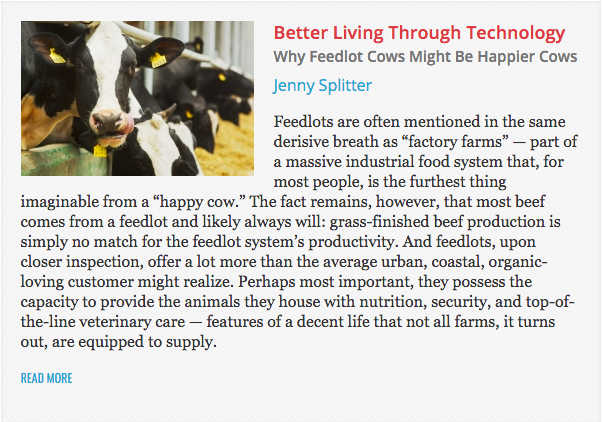
'Science Mom' Jenny Splitter sings the praises of CAFOs.

Under their mission statement they proclaim that "We believe that technology and modernizations are at the foundation of human progress." and "We believe that...long-term government investment is required to accelerate technological progress, economic growth and environmental quality."

TBI is a wet dream come true for industry. At least the ones they promote anyway, like industrial agriculture, nuclear energy and the like. Let's look at one example.

Monsanto's Director of Millennial Engagement praises BTI award recipient Rachel Laudan, who "celebrates technological, industrial, “artificial” food."

Vance Crowe promotes ecomodernism quite often, alongside the other 'tribes' he is trying to connect on behalf of his employer's best interests. He is a member of Stuart Brand's Long Now Foundation (#5454) as he announces on his Twitter bio.

Vance wants to connect the Skeptic tribe with ecomodernism.


The cringey-named Trolling With Logic podcast starring Vance and Vice Chair of the Finnish Eco-modernists.

Clearly, Monsanto and the rest of the agrochemical industry is not what we'd think of as a leader in sustainability, or planetary health. Their love of all things ecomodernist should give us pause as to the direction the Ecomodernists would like to take us. Their promise of a 'great Anthropocene' is perhaps well-intentioned, but their sheer ignorance of ecology, inconsistent rhetoric, and distortion of statistics is something to be seriously wary of. Ecomodernism seems much more ideologically based than it is grounded in reality.

"Beware of people preaching simple solutions to complex problems." - Steve Herbert